The arc flared up, the molten pool roiled, and the welding torch steadied like a rock in the hands of the three award-winning contestants—Feng Qingjie, Zhang Yongchang, and Song Taotao, the top three medalists in the welding competition of the first Changyuan City Employee Vocational Skills Competition.
These three ordinary welders from Henan Wei Hua, their work clothes still stained with welding slag, had faces flushed red under their safety helmets from the arc light.
When asked about his feelings about the competition, Feng Qingjie said, "Participating is to weigh the worth of my skills, and the medals are a recognition of my opponent's hidden strengths."
With welding guns as brushes and craftsmanship as ink, these industrial workers from the frontlines of Henan Weihua are painting the most vivid and passionate marks of the era onto the long scroll of "skilled workers serving the nation" in the new era.
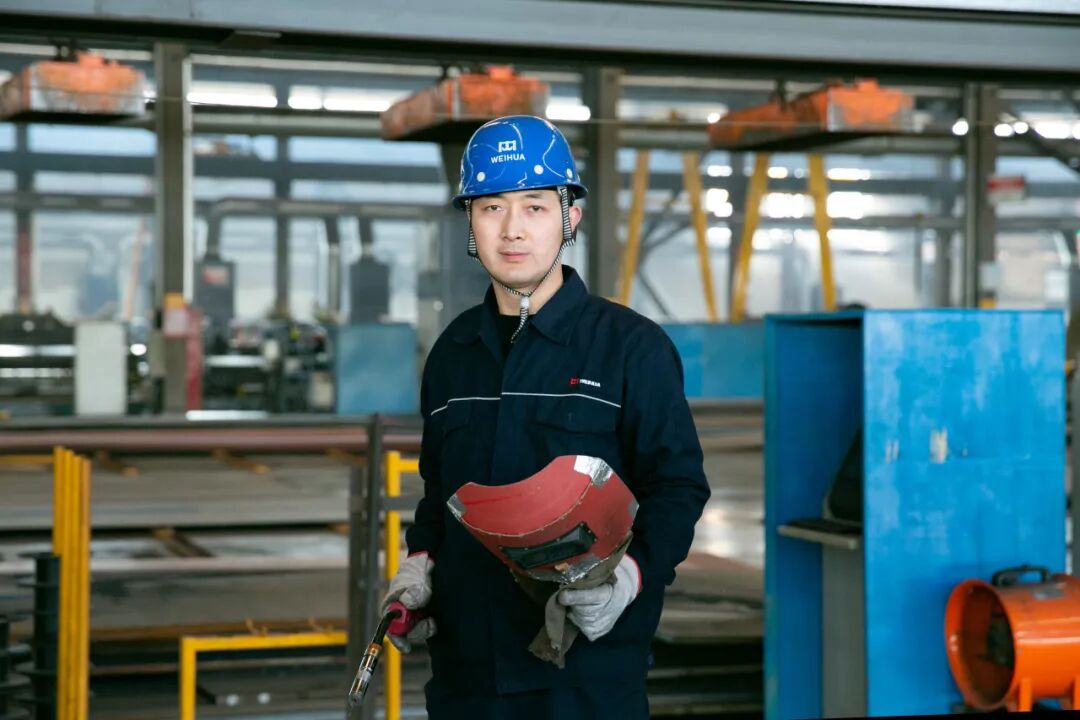
Entering the welding area of Henan Weihua's lightweight cutting workshop, Feng Qingjie was crouching low, maneuvering a welding torch over steel plates. As blue arcs flickered, two 30-millimeter-thick steel plates were seamlessly joined to form a critical component of the crane.
Then he picked up the caliper to measure the misaligned edge, saying, "0.3 millimeters, which meets the first-grade weld standard." This was the operation Feng Qingjie performed over a hundred times every day.
As the "master of splicing" in Weihua's welding workshop, he is responsible for the cutting and splicing of crane main structural components. Though seemingly basic, this process is actually the first critical step in determining the load-bearing performance of the entire equipment.
Weihua's crane products are widely used in heavy-duty fields such as ports, mines, and nuclear power plants. Key components like the main girder and end girder must withstand loads of several hundred to even over a thousand tons.
"Just like laying the foundation for building a house, if the splicing error exceeds one millimeter, it may lead to stress concentration under load in later stages, shortening the equipment's lifespan. The splicing process overseen by Feng Qingjie ensures structural stability under complex stress conditions by controlling millimeter-level precision.".
When Feng Qingjie first joined the factory twenty years ago, he was a novice who couldn't even hold a welding gun steadily. "Back then, the back of the welded test plate was full of pores," he recalled. Once, in order to find the optimal current and voltage ratio, he stayed in the workshop for twelve hours, waiting until the cross-section of the test plate became as smooth as a mirror after being cut. "Now, Feng Qingjie's craftsmanship has long become the 'gold standard' in the workshop.".
This year, the workshop received an order for export machinery destined for Mexico, with welding specifications requiring that the misalignment of all joints not exceed 0.5 millimeters—far surpassing industry standards. Feng Qingjie and his colleagues spent multiple consecutive days in the workshop, adjusting preheating temperatures and optimizing welding sequences, ultimately reducing the error to within 0.2 millimeters. "During product inspection, the client used ultrasonic testing and said our weld seams were the most beautiful they had ever seen," Feng shared
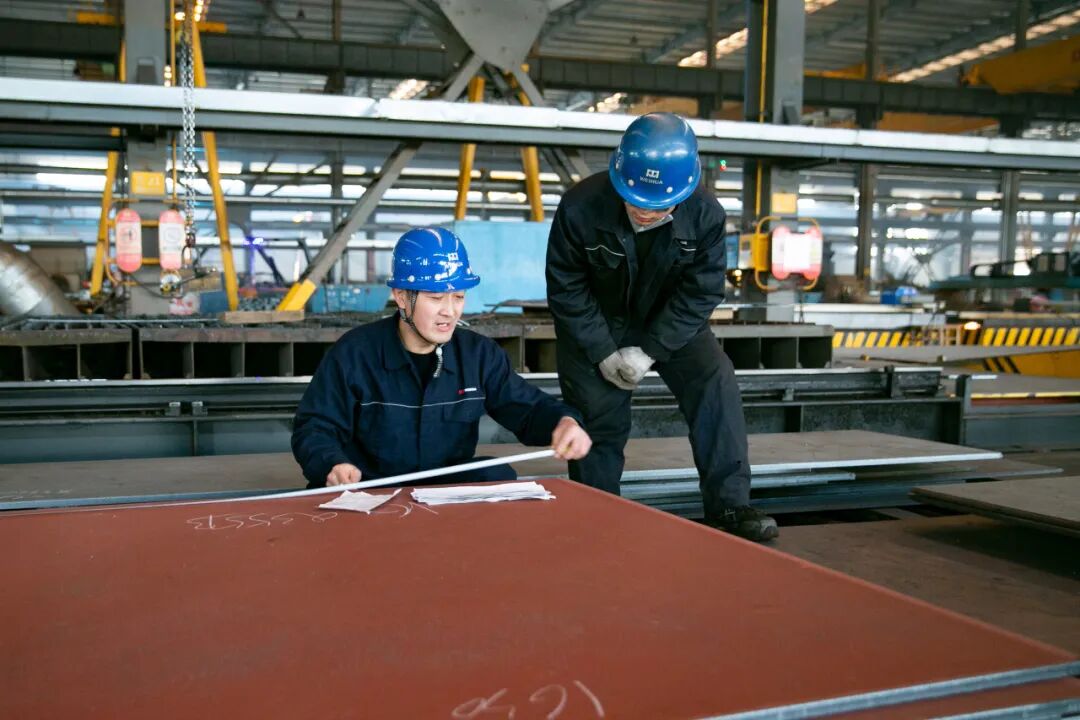
What impressed his coworkers even more was his "mentorship approach." Xiao Wang, a newly hired colleague, recalled that once when he was welding a test plate and it cracked, he was so anxious that tears rolled down his cheeks. Instead of scolding him, Feng Qingjie took him to sit by the scrap pile and gradually polished it with an angle grinder while explaining, "See, here the arc was turned off too quickly, leaving the molten pool unfilled; over there, the electrode feeding speed was uneven, causing unstable heat input." Now, his apprentices have all become key members of the team.
"This welding gun in our hands carries not only craftsmanship but also responsibility," said Feng Qingjie. "To perfect the simple is to achieve the extraordinary." These words reveal the most down-to-earth understanding of the term "craftsman" by this frontline welder.
In the double-girder fifth shift cutting section of Weihua Heavy Machinery Workshop, Zhang Yongchang and Song Taotao are "sharp-tongued adversaries" in their process partnership—Zhang specializes in submerged arc welding while Song focuses on CO2 gas shielded arc welding, with the former securing second place and the latter third in a major competition.
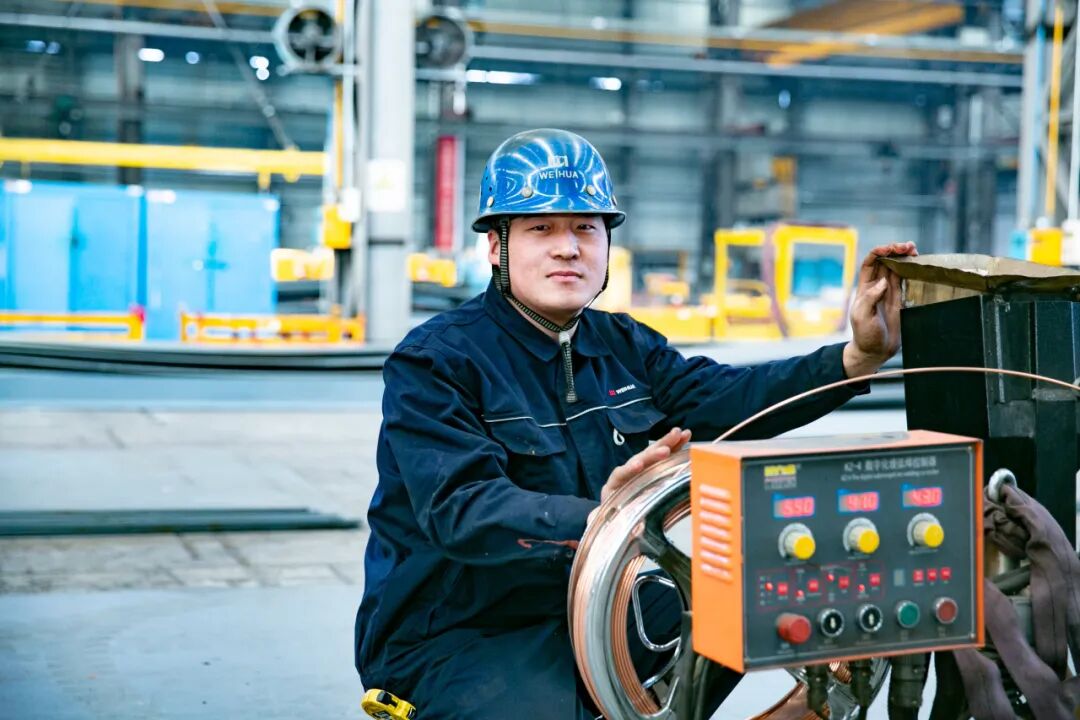
Zhang Yongchang's workstation always carried a stifling heat from metal burning. The submerged arc welds were hidden beneath the flux, with quality entirely reliant on experience and parameters.
Beneath the flux layer of submerged arc welding, the weld seam resembles a hidden river, with quality entirely dependent on experience and parameter control. "Don’t just watch the machine move automatically—parameters are alive," he leaned over, scrutinizing the main weld seam of the crane arm being welded. Under his hands, a 2-meter-long, 25-millimeter-thick steel plate gradually took shape. "H10Mn2 welding wire, 700 amps of current, 36 volts of voltage, and the wire feed speed must sync with the movement—too fast and penetration won’t be enough, too slow and it risks burning through."
"Every weld seam is crucial to the safety of the entire equipment," Zhang Yongchang rubbed his hands covered with calluses. "Last time when foreign clients came to the factory for inspection, they were particularly reassured to see our welded components operating smoothly on the crane—this is the value of our industrial workers."
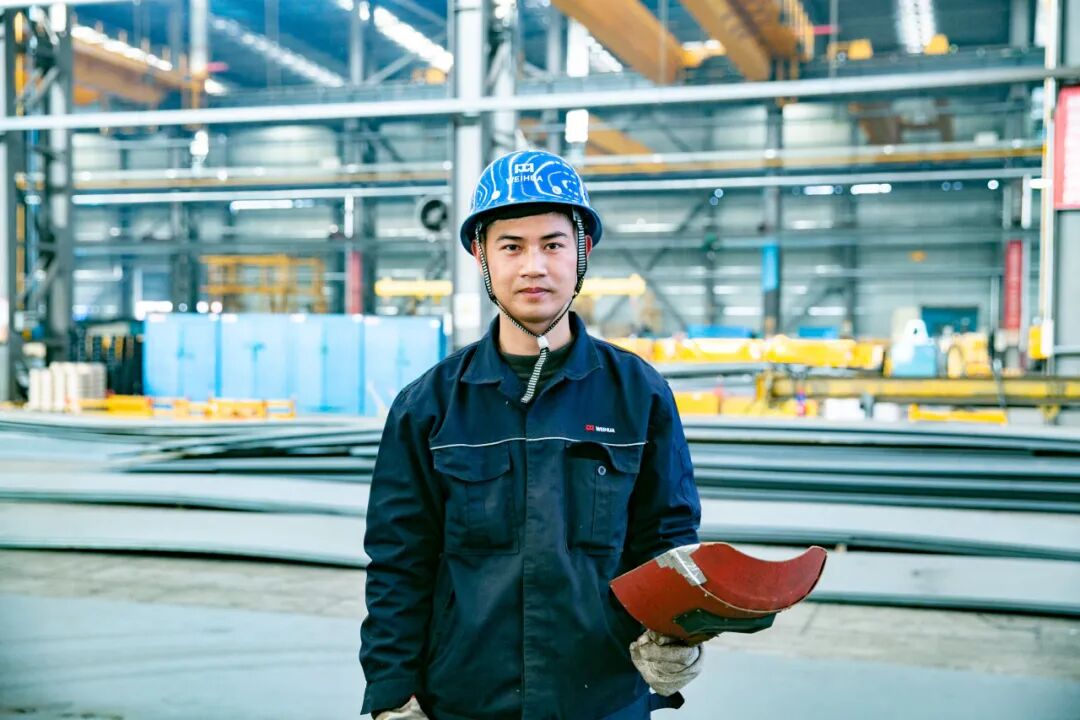
The secondary welding may seem fast, but every process requires attention to detail. "Song Taotao picked up a newly welded test plate, and the weld seam was evenly woven." This extra height of 1.5 millimeters is just in line with the standard; the melting width is 8 millimeters, and the two sides are fused tightly together - all of which are the result of stable hands, sharp eyes, and accurate parameters“
Later, he pointed to a newly welded steel plate and explained, 'When the oxygen pressure is too high, it will burn through, and when it is too low, it will cut continuously. If the preheating time is too short, slag will hang on the edges, and if it is too long, it will affect subsequent processing. This job may look rough, but in fact, the most important thing is to pay attention to the heat.'.
This summer, the workshop rushed to produce an order of 900 tons, with extremely high requirements for welds. Welds must pass 100% ultrasonic testing and cannot tolerate half a thread defect. Song Taotao stood guard at the workstation and repeatedly experimented. After two days of continuous adjustment, he finally found a combination scheme of "low current, slow wire feeding, and preheating before welding", which allowed all welds to pass the inspection in one go. This scheme later became the "standard process" for similar projects in the workshop, and even external audit experts gave a thumbs up, "What is this work? It's turning technology into art
Competition is like a mirror, reflecting one's own shortcomings; It's like a whip, pushing you to constantly improve.
Their awards are not accidental, "said Wang Yuewen, Vice President of Weihua Vocational and Technical School.
Feng Qingjie, Zhang Yongchang, and Song Taotao use the simplest way to interpret the spiritual core of industrial workers in the new era - they are the operators of machines, but also the guardians of quality; It is not only the executor of the process, but also the standard setter; He is not only an individual struggler, but also a promoter of the industry.
In their hands, the welding gun is not only a tool, but also a pen to write the future; The workshop is not only a workplace, but also a stage for realizing value.


